 How-to
7 Small Kitchen Remodel Ideas on a Budget That Work
Last Updated: November 17, 2026
Quick Summary
A small kitchen remodel on a budget works best when you price the whole job first and split your total into categories, keeping 10-15% as a contingency for hidden repairs. Save money by keeping your layout, painting cabinets instead of replacing them, and choosing a peel-and-stick or subway tile backsplash.
- Cabinets and hardware should take 25-30% of your budget, with labor at 20-25%.
- Moving a sink or range adds plumbing and electrical costs, so keep the layout.
- Floating shelves deeper than 10 to 12 inches crowd the counter and block light.
- LED strip lights in the 3000K to 4000K range give clean, neutral task lighting.
- Paint cabinets before the backsplash goes in to avoid redoing work.
Table of Contents
- Start With a Plan: What a Small Kitchen Remodel Actually Costs
- 1. Refresh Cabinets With Paint and New Hardware
- 2. Add a Low-Cost Backsplash That Looks Custom
- 3. Small Kitchen Storage Ideas That Use Every Inch
- 4. Tiny Kitchen Remodel Ideas That Make the Room Feel Bigger
- 5. Small Apartment Kitchen Ideas on a Budget for Renters
- 6. Lighting, Paint, and Surfaces That Brighten a Dark Kitchen
- 7. DIY or Hire a Pro? Safety, Code, and Sequencing Your Projects
- Frequently Asked Questions
Start With a Plan: What a Small Kitchen Remodel Actually Costs
A small kitchen remodel ideas on a budget plan starts with one honest number: what you can spend before you pick a single tile. The people who finish on budget are usually the ones who priced the whole job before demo day.
Small kitchen remodel cost swings widely depending on scope, materials, and whether you hire out the labor. We won't quote you a fake number here. Instead, plan in three buckets: materials, labor, and a contingency fund for surprises behind the walls.
A common mistake is spending the whole budget on visible finishes and leaving nothing for plumbing or electrical fixes. Keep a reserve. Old kitchens hide things.
A Sample Budget by Project Category
Split your total into categories before you shop. A workable structure looks like this:
| Category | Share of Budget | What It Covers |
|---|---|---|
| Cabinets and hardware | 25-30% | Paint, doors, knobs, pulls |
| Countertops and surfaces | 15-20% | Counters, backsplash, sink |
| Lighting and electrical | 10-15% | Fixtures, under-cabinet lights |
| Labor and installation | 20-25% | Trades, installers, tile work |
| Contingency | 10-15% | Hidden repairs, changes |
Share of Budget
Adjust the shares to your kitchen, but keep the contingency. For a deeper look at stretching every dollar, our guide on how to remodel a kitchen on a budget walks through the design strategy behind these numbers.
What Drives the Cost Up or Down
Three things move the price most: layout changes, material grade, and how much you do yourself. Moving a sink or range means new plumbing and electrical, and that adds up fast. Keeping the layout where it is saves money every time.
Material grade matters too. A stock cabinet door and a custom one look similar from across the room but price very differently. Labor is the third lever. Painting cabinets yourself trims the bill; installing a new counter does not. If you want to spot the traps before they bite, read our breakdown of how to avoid hidden construction costs.
1. Refresh Cabinets With Paint and New Hardware
Cabinet paint is often one of the highest-impact, lowest-cost moves in a small kitchen remodel. A fresh coat plus new cabinet hardware can refresh a dated kitchen for less than replacement.
Prep decides whether the paint lasts. Degrease every door, sand lightly, and use a bonding primer.
Contrasting cabinets and two-tone cabinets are popular now: a lighter upper and a deeper lower make the room read bigger. If your cabinet doors are sound, refinishing beats replacing. New doors alone, without new boxes, is another budget-friendly middle path.
Watch out: painting over greasy cabinets without degreasing leads to peeling within months, and you'll pay twice to fix it.
2. Add a Low-Cost Backsplash That Looks Custom
A peel-and-stick backsplash or a simple subway tile install gives a custom look without a custom price. Backsplash is one of the best places to save, because the area is small and the visual payoff is large.
Peel-and-stick tiles are renter-friendly and quick, but they show seams and may not last as long as real tile. Pick based on how long you plan to stay.
For tile that reads high-end, planning the layout matters more than the material. Our custom tile installation design tips cover spacing, pattern, and grout choices that make an affordable tile look intentional.
3. Small Kitchen Storage Ideas That Use Every Inch
Small kitchen storage ideas win remodels, but only when they are sized and placed correctly. The trick is using wall space and vertical storage that most kitchens waste, and doing it with measurements and a budget in hand rather than buying organizers on impulse.
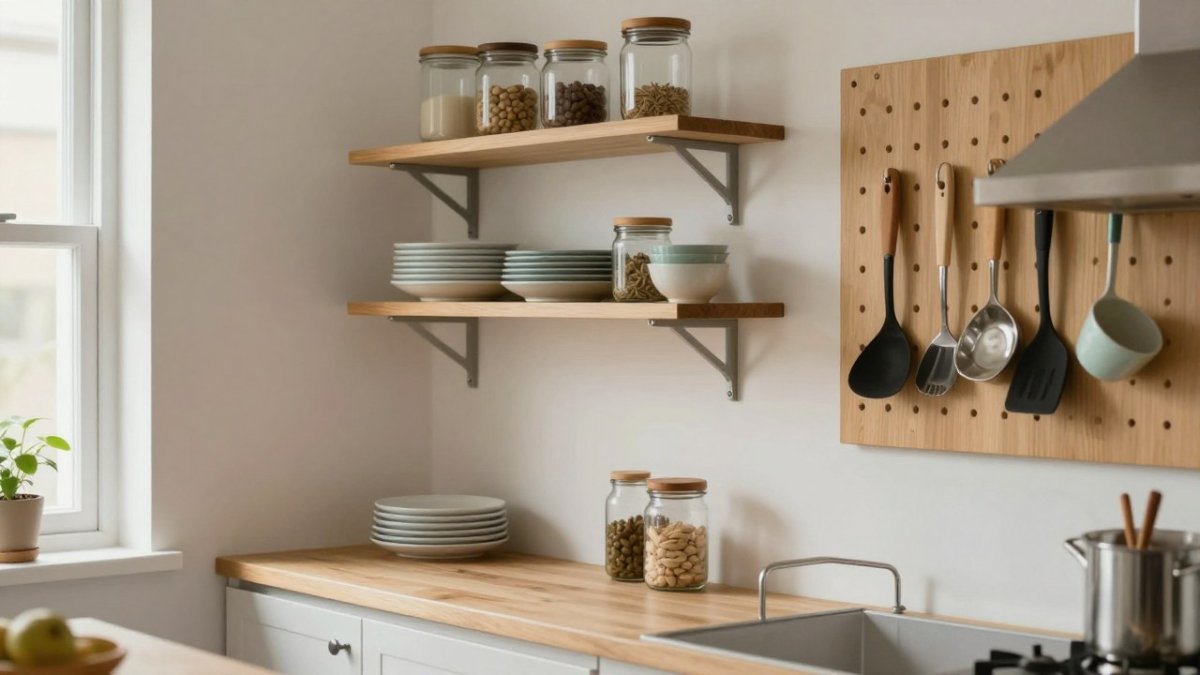
Measure Before You Buy
Start with three numbers: the clear wall width between your upper cabinets and the counter, the depth of your countertop (typically 24 to 25 inches), and the walkway width between opposing counters or appliances. A common planning target is at least 36 inches of clear walkway in a one-cook kitchen and 42 inches where two people work at once. If a storage piece would drop the walkway below that, it will make the kitchen feel smaller, not bigger.
For wall storage, measure the vertical gap between the counter and the bottom of the uppers. Many kitchens have 18 inches; some have 15. Floating shelves deeper than 10 to 12 inches crowd the counter and block light, so stay at or under that depth. A pegboard panel 24 by 36 inches fits most bare end walls and holds utensils, pans, and measuring cups without eating counter space.
Open Shelving, Pegboards, and Vertical Space
Open shelving and floating shelves open up a tight kitchen and put daily dishes within reach. A pegboard on a bare wall holds utensils and pans. A rolling cart adds multipurpose storage you can move where you need it. A tension rod or slim pull-out beside the fridge recovers the dead gap most kitchens ignore.
Cost and effort vary more than the photos suggest. Pricing for shelving, pegboards, and rolling carts depends on materials, size, and where you buy them. These are often DIY-friendly weekend projects if you can find studs and own a drill and level. Custom built-ins or pull-out pantry inserts usually call for a carpenter. For current pricing or a quote on custom work, visit the JB's Construction LLC website.
Durability matters too. Open shelves show dust and grease faster than closed cabinets, so plan on wiping them weekly in a kitchen with heavy cooking. Pegboards hold up well but need anchors rated for the load; a cast-iron pan on a drywall anchor will pull out. Rolling carts are only as good as their casters, so choose locking wheels if the cart will sit against a counter.
Decluttering comes first. Clear the counters, then add storage solutions for what's left. Space-saving doesn't mean cramming; it means giving every item a home. A simple rule: if an item is used daily, it earns counter or eye-level shelf space; if it is used monthly, it goes high or into a closed cabinet.
4. Tiny Kitchen Remodel Ideas That Make the Room Feel Bigger
Light colors and a clear sightline make a tiny kitchen feel larger. Tiny kitchen remodel ideas lean on paint, color palette, and layout, not square footage.
Choose a light color palette for walls and cabinets. Light colors reflect and create visual space. Keep the countertops clear and let the eye travel. A kitchen rug and consistent flooring pull the room together without chopping it up.
Before you buy anything, measure. Note door swings, appliance clearances, and walkway widths. A beautiful layout that blocks the fridge is a wasted remodel.
5. Small Apartment Kitchen Ideas on a Budget for Renters
Small apartment kitchen ideas on a budget have to respect the lease. Renter-friendly updates are removable: peel-and-stick backsplash, temporary hardware, freestanding storage, and plug-in lighting.
Skip anything permanent. No cabinet paint if your lease forbids it, and no drilling into tile. Focus on decorative accents, organization, and lighting you can take with you. When you move, your updates move too.
6. Lighting, Paint, and Surfaces That Brighten a Dark Kitchen
Under-cabinet lighting is the fastest way to brighten a dark kitchen. Add task lighting where you chop and prep, and the whole room feels bigger and cleaner. The details matter more than the fixture count: color temperature, placement, and layering decide whether the room reads bright or just cluttered with lights.
Layer the Light
A dark kitchen usually has one ceiling fixture doing all the work. Fix that with three layers: ambient (ceiling), task (under-cabinet and pendant over the sink or island), and accent (inside glass cabinets or above open shelves). For task lighting, LED strip lights in the 3000K to 4000K range give a clean, neutral light that flatters food and finishes without the blue cast of cooler bulbs. Warm 2700K suits living areas but can make a work zone feel dim.
Plug-in LED strip kits are the renter-friendly option. Hardwired strips cost more in labor but hide the wiring. Pricing for fixtures depends on the product chosen and installation needs. For current pricing or a quote, visit the JB's Construction LLC website. Any new hardwired circuit or fixture in a wet area should be installed to code, and a licensed electrician is the safe call if you are unsure.
Paint Choices That Make the Room Feel Larger
Paint the ceiling a bright white and keep cabinet colors light. Light colors reflect and create visual space. A common approach is to paint walls and uppers in the same light tone and use a slightly deeper color on lowers for grounding. Semi-gloss or satin finishes wipe clean in a kitchen better than flat, which shows grease and scuffs.
Surfaces: Refresh vs. Replace
For surfaces, a countertop refresh, a new faucet, or a fresh kitchen sink can update the look without a full replacement. These small swaps add up to a real transformation, but durability separates the budget options. Laminate counters are the lowest-cost refresh and hold up for years with proper care, though seams and heat are their weak points. Butcher block is warmer and repairable but needs regular oiling. Peel-and-stick counter films are cheap and quick but short-lived in wet zones. A new faucet in the $80 to $200 range and a drop-in sink in the $150 to $400 range are straightforward swaps that make a dated kitchen feel current.
Watch out: painting cabinets or walls without degreasing first leads to peeling and uneven sheen, and it is the most common reason a budget paint job looks cheap within a year.
7. DIY or Hire a Pro? Safety, Code, and Sequencing Your Projects
Know your limits before you swing a hammer. Painting, hardware, and peel-and-stick are safe DIY projects. Electrical, plumbing, gas, and structural work belong to licensed pros, and permits may be required.
Sequence projects to avoid redoing work. Paint cabinets before the backsplash goes in. Install lighting before you close up walls. A weekend-by-weekend order keeps the job moving.
A Weekend-by-Weekend Project Order
- Weekend 1: Declutter, measure, and set your budget.
- Weekend 2: Paint cabinets and swap hardware.
- Weekend 3: Add lighting and paint walls.
- Weekend 4: Install backsplash and storage.
- Weekend 5: Refresh surfaces and finish accents.
If you're deciding whether to bring in help, our guide on how to avoid remodeling budget surprises and our advice on how to hire a reliable residential contractor will save you grief. JB's Construction LLC offers free estimates and constant communication until the job is done, with custom tile work and home additions as specialties.
Your kitchen doesn't need a huge budget, it needs a clear plan and honest sequencing. If a project calls for a licensed hand or you simply want it done right the first time, JB's Construction LLC brings residential remodeling experience since 2020, free estimates, and steady communication from start to finish. Get started with JB's Construction LLC and turn your small kitchen into a space that works.
Frequently Asked Questions
Can you remodel a small kitchen for $5,000?
Yes, if you focus on cosmetic updates rather than layout changes. Painting cabinets, swapping hardware, adding a peel-and-stick backsplash, upgrading lighting, and installing open shelving can all fit inside that range when you do the labor yourself. The money runs out fast if you move plumbing, replace countertops, or hire out every task. Get a written estimate before committing so you know which items fit your budget and which need to wait.
Which small kitchen remodel projects can you do yourself?
Painting cabinet doors, replacing hardware, installing peel-and-stick backsplash tile, adding under-cabinet lighting, hanging open shelves into studs, and decluttering with drawer organizers are all realistic DIY projects. Leave electrical work, plumbing changes, countertop fabrication, and anything that touches structural walls to a licensed professional. If you are unsure whether a wall is load-bearing, stop and call someone before you cut into it.
How do you update kitchen cabinets on a budget?
Paint is the cheapest route. Clean and degrease the doors, scuff-sand, prime, and apply two coats of a cabinet-grade paint, then add new pulls and knobs. If the boxes are solid but the doors look dated, replacing just the doors and drawer fronts costs less than a full cabinet replacement. Two-tone cabinets, with a darker lower and lighter upper, add visual interest without extra material cost.
What should you prioritize in a small kitchen remodel?
Start with storage and lighting, because both change how the room functions every day. Vertical storage, drawer organizers, and open shelving reduce counter clutter, while brighter under-cabinet and overhead lighting makes a tight space feel larger. Cabinets and paint come next since they deliver the biggest visual change per dollar. Save countertops, flooring, and appliance swaps for last, once the affordable updates are done and you know what budget remains.