 How-to
How to Remodel a Kitchen on a Budget: Smart Design Strategies
Last Updated: November 11, 2026
Quick Summary
To remodel a kitchen on a budget, set one total figure first, subtract a contingency reserve, then rank changes as must-have, important, nice-to-have, or defer. Keeping the existing layout, refinishing or refacing cabinets, and choosing durable countertops also control costs in a kitchen remodel.
- Set a single total budget and subtract a contingency reserve before allocating anything else.
- Rank each change as must-have, important, nice-to-have, or defer, and cut nice-to-haves first.
- Keep the existing layout to avoid costly plumbing, gas, and electrical rerouting.
- Refinish or reface cabinets when the boxes are sound, instead of replacing them.
- Compare countertops by lifecycle cost, including sealing, repairability, and replacement cost.
Table of Contents
- Start With a Realistic Budget and a Clear Priority List
- Keep the Existing Layout to Avoid Costly Plumbing and Electrical Changes
- Refinish or Reface Your Cabinets Instead of Replacing Them
- Choose Affordable, Durable Countertops and Finishes
- IKEA Kitchen Remodel Options and How They Compare to Custom Cabinetry
- Itemized Kitchen Remodel Cost Breakdown and Where Money Goes
- Planning Your Next Step: Getting a Free Estimate From JB's Construction LLC
- Frequently Asked Questions
Start With a Realistic Budget and a Clear Priority List
Most kitchen remodels go over budget because the homeowner never set a number before the first demo day. A workable kitchen budget is built in three steps: a total number you can afford without borrowing against future flexibility, a priority ranking that shows where that money should go, and a contingency reserve that covers the problems you cannot see yet.
Start by writing your total budget as a single figure, then subtract a contingency reserve before you allocate anything else. Many homeowners set aside a contingency reserve of several percent of the project total for surprises. The reserve is not waste. Older homes often reveal rotted subfloor, outdated wiring, or undersized supply lines once the cabinets come off, and those repairs are usually required before new work can proceed.
Next, rank the changes you want using a simple framework. Write each item on a separate line and tag it as one of the following:
- Must-have: Fixes a problem you already live with, such as failing flooring, inadequate task lighting, or a water-damaged base cabinet
- Important: Changes daily use, such as adding counter run or replacing a deep drawer system with pull-outs
- Nice-to-have: Visual upgrades, such as statement hardware, a pot filler, or a range hood with a custom enclosure
- Defer: Anything that can be added later without tearing out new work, such as under-cabinet lighting if the wiring is already in place
Once each item has a tag, sum the must-have and important items against your remaining budget. If the total is over, the nice-to-have list is where you cut first. If the must-haves alone exceed the budget, the choice is usually between scaling back the scope or reducing the cabinet and countertop tier, because those two categories typically drive most of the cost.
Watch out: A budget that only lists finishes and appliances often omits labor, permits, and disposal fees. Add those lines before you compare any contractor bid, or the bids will not be comparable.
Keep the Existing Layout to Avoid Costly Plumbing and Electrical Changes
Moving the sink, stove, or fridge is often the biggest cost driver in a kitchen remodel. Every move can mean new supply lines, drain lines, gas lines, and electrical runs, plus permits and inspections. Keeping the existing kitchen layout is one of the most reliable ways to cut costs.
Work with the footprint you already have. Swap in new cabinets, counters, and lighting in the same spots, and you avoid most of the rerouting expense.
Watch out: Relocating a range or adding new circuits often requires a licensed electrician and a permit. Check local rules before you assume a change is a simple one.
If you want a layout change, sketch the option on paper first and get a quote for the rough-in work before you commit.
Refinish or Reface Your Cabinets Instead of Replacing Them
Cabinets are often the largest single line item in a remodel. Replacing every box and door can cost far more than the rest of the budget combines. Refinishing and refacing offer a lower-cost path to a fresh look.
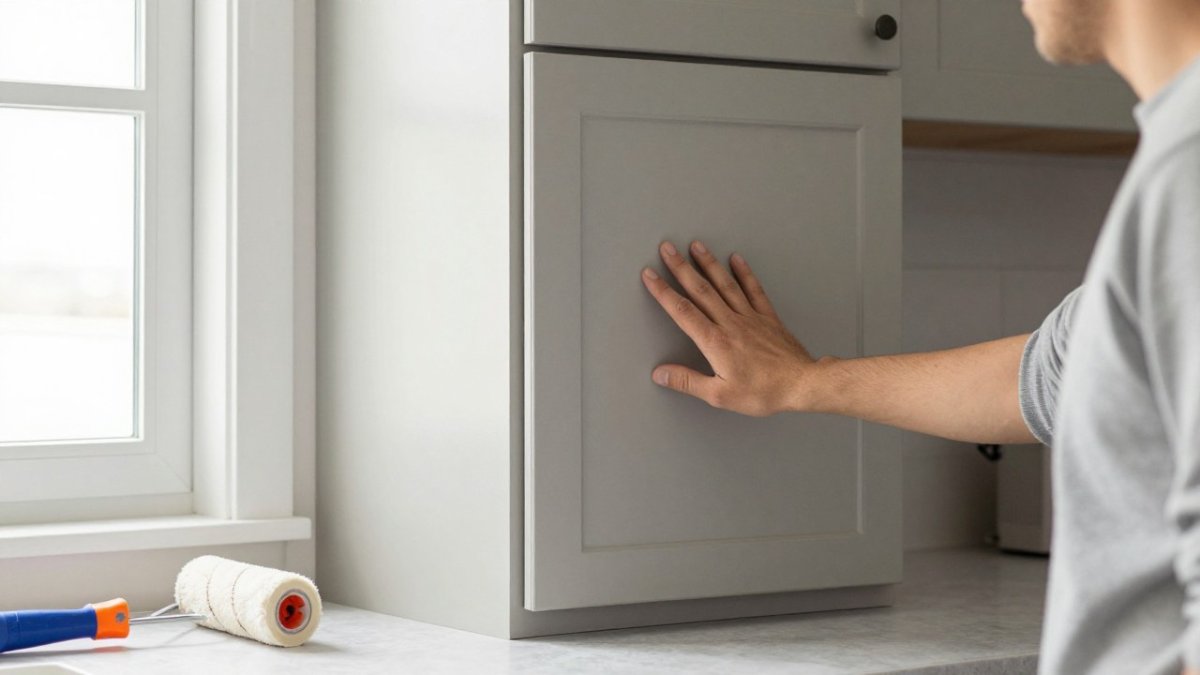
- Refinishing: Sand, prime, and repaint or stain the existing doors and frames
- Refacing: Keep the cabinet boxes and add new doors, drawer fronts, and veneer
- Replacing: Install entirely new cabinet boxes and doors, usually the priciest option
Refinishing works well when the cabinet boxes are solid and well built. Refacing suits boxes that are sound but dated in style. Replacing makes sense when the boxes are warped, water-damaged, or do not fit your layout.
A muted, two-tone color scheme can make painted cabinets look intentional and timeless. Pair it with new hardware for a noticeable update at a fraction of replacement cost.
Choose Affordable, Durable Countertops and Finishes
Countertops are the surface you use most, so the right comparison is not purchase price alone. Lifecycle cost combines the initial installed price, the maintenance you will perform over the years, how easily the surface can be repaired, and what it costs to replace when it wears out.
Laminate is easy to swap out, but it cannot be sanded or refinished, so deep scratches and heat damage are permanent. Butcher block can be restored by light sanding and oiling when worn. It does require regular oiling and is not ideal around the sink, where water exposure causes swelling and cracking unless the edges are sealed carefully.
Quartz is an engineered surface that resists staining and does not need sealing. Its weakness is repair: chips and cracks generally require professional fabrication work, and heat can damage the resin. Natural stone such as granite needs periodic sealing, and can be restored by a professional when stained, but a cracked slab usually means full replacement.
When you compare these, ask four questions for each option: what it costs installed, how often it needs sealing or oiling, whether a chip or burn can be repaired on site, and how much a like-for-like replacement would cost in 10 to 15 years. A surface that stains or chips within a few years and cannot be repaired may cost more over its life than a more durable surface you keep for decades.
For finishes beyond the counter, a few choices stretch a modest budget. Peel-and-stick tile or simple subway tile can produce a clean backsplash, though adhesive products need a smooth, dry wall to bond properly. Luxury vinyl plank can be repaired by replacing individual planks.
Watch out: Sealing a natural stone counter once at installation is not enough for most finishes. Confirm the sealing schedule the fabricator recommends and write it down, because a missed reseal is the most common cause of premature staining.
IKEA Kitchen Remodel Options and How They Compare to Custom Cabinetry
IKEA kitchen cabinets are a popular option for homeowners. Their modular system offers many styles. Many homeowners use IKEA boxes paired with custom doors or panels for a more built-in look.
The trade-offs are real. Custom cabinetry offers exact sizing, premium materials, and layouts built around odd spaces. IKEA works best in standard-size kitchens where the layout is straightforward. Plan carefully, because modular systems require precise measurements and careful installation.
For a quick comparison:
- IKEA: Lower cost, fast delivery, DIY-friendly, limited customization
- Semi-custom: Mid-range cost, more finish and size options, professional install
- Custom: Highest cost, built to your exact specs, longest lead time
Itemized Kitchen Remodel Cost Breakdown and Where Money Goes
Knowing where money goes helps you spend wisely. Costs vary by materials and scope, so treat these categories as a checklist rather than fixed prices. Get written quotes for your specific project.
Typical budget categories include:
- Cabinets: Often the largest share of the budget
- Countertops: Material choice drives the price
- Labor: Demolition, installation, plumbing, and electrical work
- Appliances: Mid-range models often offer the best value
- Flooring and backsplash: Smaller costs that affect the finished look
- Permits and fees: Required for many structural, electrical, and plumbing changes
- Contingency: A cushion for unexpected repairs
For accurate figures tied to your home, see our guide on how much custom carpentry framing costs, since framing and structural work can change the budget quickly. You can also review current residential construction pricing for 2026 to check your numbers against broader trends.
The article lists the main budget categories a kitchen remodel typically draws on.
| Budget category | What it covers | Note |
|---|---|---|
| Cabinets | Often the largest share of the budget | Usually the biggest single line item |
| Countertops | Material choice | Material choice drives the price |
| Labor | Demolition, installation, plumbing, electrical | Get written quotes |
| Appliances | Kitchen appliances | Mid-range models often offer best value |
| Flooring and backsplash | Finish surfaces | Smaller costs affecting the look |
| Permits and fees | Structural, electrical, plumbing changes | Required for many changes |
| Contingency | Unexpected repairs | A cushion against surprises |
Planning Your Next Step: Getting a Free Estimate From JB's Construction LLC
A budget-friendly kitchen starts with a clear plan. At JB's Construction LLC, we help homeowners set realistic goals, keep communication open, and avoid surprises from start to finish. Before you request a quote, learn how to get an accurate home renovation project quote so you know what details to share. When you are ready to move forward, book a custom home renovation consultation to talk through your priorities and options.
If you are looking for a contractor you can trust, how to hire a reliable residential contractor walks you through what to check. Get a Free Estimate from JB's Construction LLC, and we will keep you informed throughout your kitchen project.
Frequently Asked Questions
What is a realistic budget for a kitchen remodel?
Budgets vary widely with square footage, the scope of work and material choices, so JB's Construction LLC does not publish a typical cost figure here. A practical approach is to list every item you want, separate the must-haves from the nice-to-haves, and set a total you can afford before any design work begins. Keep a contingency reserve for surprises behind walls or under floors. For a current number tied to your home, request a free estimate from JB's Construction LLC, which accounts for permits and material pricing.
Can I get a cheap kitchen remodel without replacing the cabinets?
Yes. Refinishing or refacing existing cabinets, then updating hardware, lighting and paint, can refresh a kitchen without replacing sound cabinet boxes. Check that the cabinet boxes are structurally sound before committing to this route.
Are IKEA kitchen remodels a good option for a tight budget?
IKEA cabinetry still requires installation, countertop templating, plumbing and electrical work, and possibly modifications to fit your walls. Compare the full installed cost, not just the cabinet price, and confirm the design fits your existing layout. For a quote that covers installation alongside materials, contact JB's Construction LLC directly.
How can I keep a kitchen remodel from going over budget?
Lock in the scope before demolition, keep the existing layout where possible, and build a contingency reserve in your budget for unexpected conditions. Track change orders in writing and approve each one before work proceeds. Clear communication with your contractor throughout the project is the most reliable way to avoid surprise bills.