 how-to
7 Steps to Avoid Hidden Construction Costs
Last Updated: November 4, 2026
Quick Summary
Avoid hidden construction costs by comparing a detailed, line-by-line estimate with your plans and clarifying what is included, excluded, or still uncertain before signing. Keep a separate contingency for unknown conditions, and require written, approved change orders that explain added work, price, and schedule effects before work proceeds whenever circumstances allow.
- Ask contractors to mark every estimate item as included, excluded, an allowance, or unresolved.
- Compare bids using the same scope, materials, allowances, exclusions, and schedule.
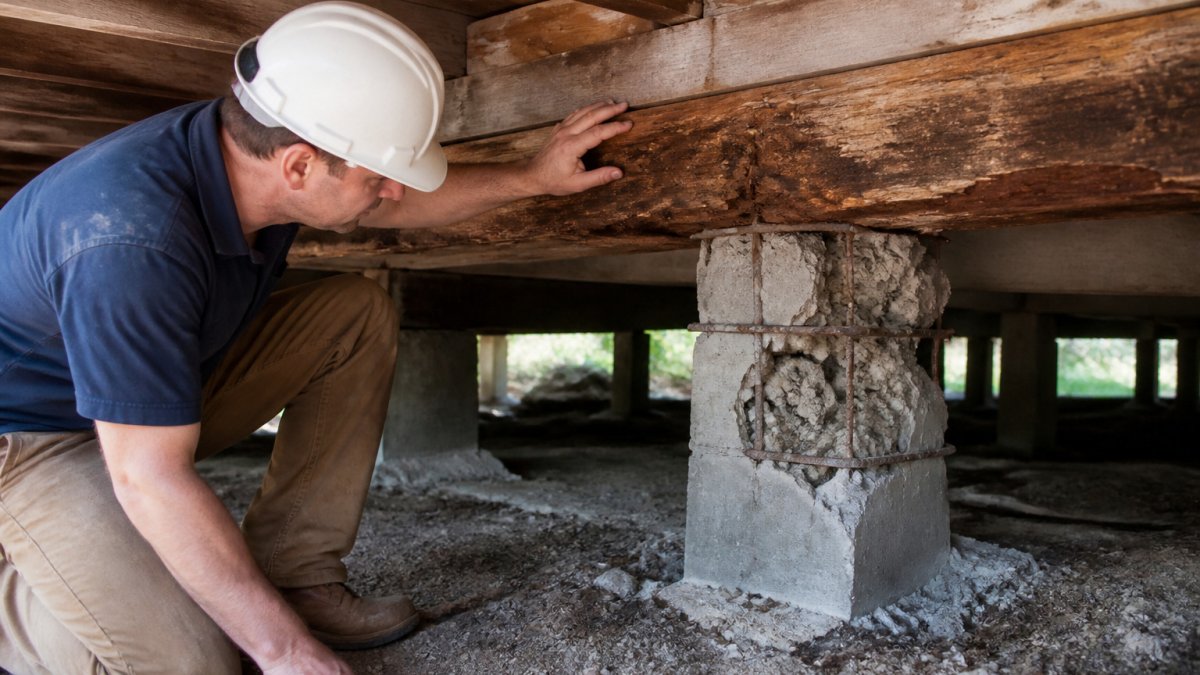
- Document concealed conditions with photos or other appropriate evidence and request a written repair proposal.
- Track the original estimate, approved changes, payments, and remaining contingency in one current record.
Table of Contents
- Step 1: Build a home renovation contingency budget
- Step 2: Use a construction estimate checklist
- Step 3: Compare contractor bids line by line
- Step 4: Put construction contract change orders in writing
- Step 5: Plan for site conditions, labor, materials, and delays
- Step 6: Track costs and respond to surprises promptly
- Step 7: Request a clear remodeling estimate from JB's Construction LLC
- Frequently Asked Questions
Step 1: Build a home renovation contingency budget
A contingency budget is money reserved for uncertain work, not a substitute for a complete estimate. Before signing, build a line-by-line forecast that separates confirmed costs, undecided selections, and risks that cannot be priced until the work area is opened. Use the residential construction pricing guide to benchmark costs and set a realistic contingency budget. Ask the contractor to identify the basis for each estimate and to mark every item as included, excluded, allowance, or unresolved.
Use this checklist to review the estimate with the contractor:
- Design and scope: Confirm that the estimate follows the current plans and lists each room, task, finish, and relevant specification. Identify design work or revisions that are not included.
- Site work and protection: Check demolition, hauling, disposal, dust protection, access, surface protection, and any grading or excavation that applies. Ask how concealed conditions will be documented and priced.
- Permits and inspections: Identify who will determine permit requirements, submit applications, arrange inspections, and pay related fees. Confirm whether those costs are included or remain an owner responsibility.
- Utilities and temporary services: Ask whether plumbing, electrical, or HVAC disconnections and reconnections are included. Consider temporary power, water, or other services if the project requires them.
- Materials and delivery: List specified products, quantities where available, delivery, storage, waste, and removal of packaging. For undecided items, record the allowance and what happens if the selected product exceeds it.
- Labor and subcontractors: Check which trades are included, who coordinates them, and whether the estimate assumes uninterrupted access or particular work hours.
- Schedule and protection of the home: Ask about the planned sequence, cleanup, and any costs that could arise if work is delayed or the home cannot be used as planned.
- Closeout: Confirm final cleanup, inspections, required documentation, and completion of agreed punch-list items.
- Owner costs: Separately consider storage, temporary accommodation, financing costs, and any insurance questions that apply to your situation. These may not appear in a contractor’s construction estimate.
- Contingency: Keep a separate reserve for genuinely unknown conditions. Agree on how a proposed use will be explained, priced, approved, and recorded.
A useful review is to trace each line from the plans to the estimate: if a task appears in the plans but has no matching estimate line, ask whether it is included, excluded, or covered by an allowance. Then total the confirmed costs separately from allowances and unresolved items so the headline bid does not disguise what is still uncertain.
Do not use contingency funds for optional upgrades without first updating the forecast. If you choose a more expensive finish, record that as a selection change rather than treating it as an unforeseen condition. Keep the estimate, plans, selections, and written answers together so later changes can be compared with the original scope.
For permit and inspection questions, consult the U.S. Department of Housing and Urban Development’s home improvement guidance. Use it as general homeowner guidance, and confirm requirements for the specific project with the relevant local building department.
Step 2: Use a construction estimate checklist
A construction estimate checklist is a written list of work, materials, and project costs that an estimate should cover. It helps you spot gaps before they turn into surprise charges. Ask for each item to be marked as included, excluded, or still unknown.
Check that the estimate names:
- Demolition and debris removal
- Site preparation and protection
- Materials, delivery, and waste removal
- Labor, subcontractors, and schedule
- Permits, inspections, and cleanup
- Allowances for items not yet selected
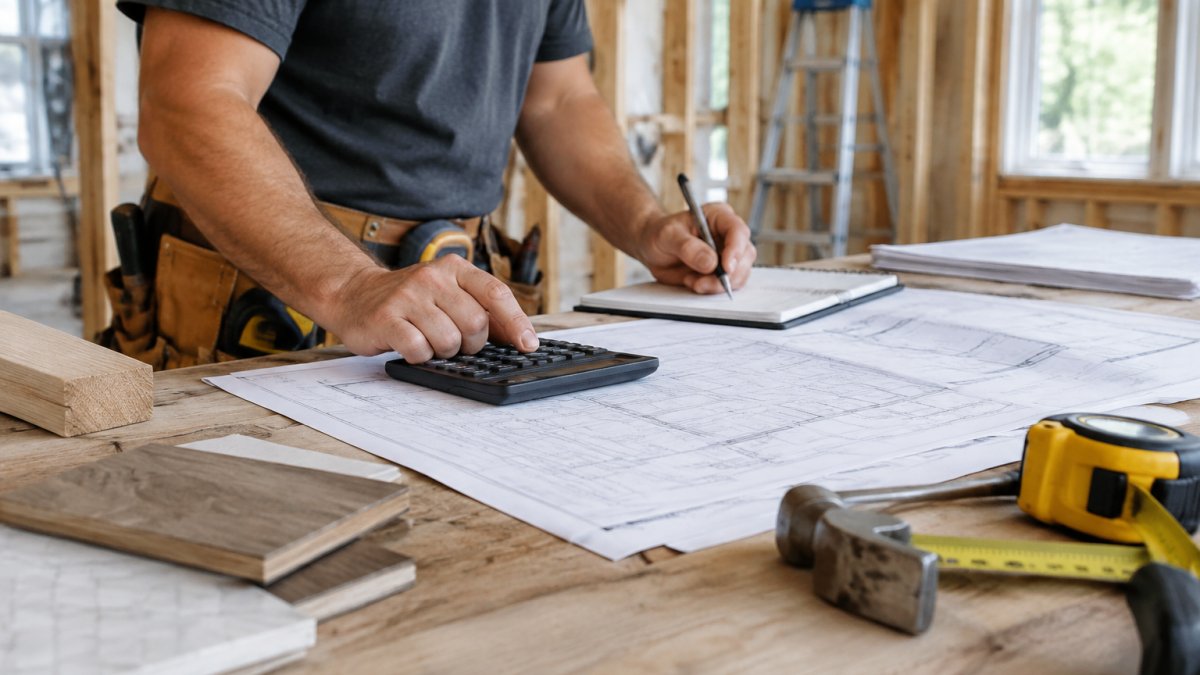
This is how to avoid hidden construction costs before the first workday: compare the estimate with your plans, room by room. If a line says “allowance,” ask what it covers and what happens if your choice costs more.
The Federal Trade Commission’s home improvement advice also recommends getting written estimates and checking contract details before work begins. Keep those records together so you can track what changed.
Step 3: Compare contractor bids line by line
To compare contractor bids, match the scope of work, materials, allowances, exclusions, and schedule before looking at the total. A lower bid may leave out work another estimate includes. Ask each contractor to clarify the same open items in writing.
| Compare | Ask for | Why it matters |
|---|---|---|
| Scope | Same tasks and rooms | Prevents gaps |
| Materials | Brand, type, finish | Avoids unlike choices |
| Allowances | Items and limits | Shows what remains undecided |
| Exclusions | Work not included | Flags possible added costs |
| Schedule | Start and work stages | Reveals timing assumptions |
The real difference between bids often sits in the details, not the total. Ask for a line-by-line explanation of demolition, disposal, site preparation, and subcontractor coordination. Those items can affect cost and timing.
A common mistake is choosing the lowest number before checking exclusions. For how to avoid hidden construction costs, get unclear items resolved before signing, not after work starts.
Step 4: Put construction contract change orders in writing
Construction contract change orders are written records of changes to the agreed work, price, or schedule. Use one whenever you change the scope or the contractor finds work that was not visible before demolition. A clear record helps both sides track the decision.
Before approving a change, ask for:
- The reason for the added work
- The exact task and materials
- The cost effect and payment timing
- Any change to the project schedule
- Your approval before the work begins
Contract review matters most around exclusions, allowances, and how unforeseen conditions will be handled. Don’t rely on a hallway conversation. Save the revised scope, estimate, and approval together.
For general contract guidance, the Consumer Financial Protection Bureau’s home improvement resource can help you review financing questions tied to a renovation. Check the terms that apply to your own agreement.
Step 5: Plan for site conditions, labor, materials, and delays
Some construction costs cannot be confirmed until demolition or excavation exposes the work area. You can still reduce uncertainty before work starts by asking what has been inspected, what remains concealed, and how the contractor will document and price a discovery. Separate visible, verified conditions from assumptions in the estimate rather than treating every unknown as an open-ended charge.
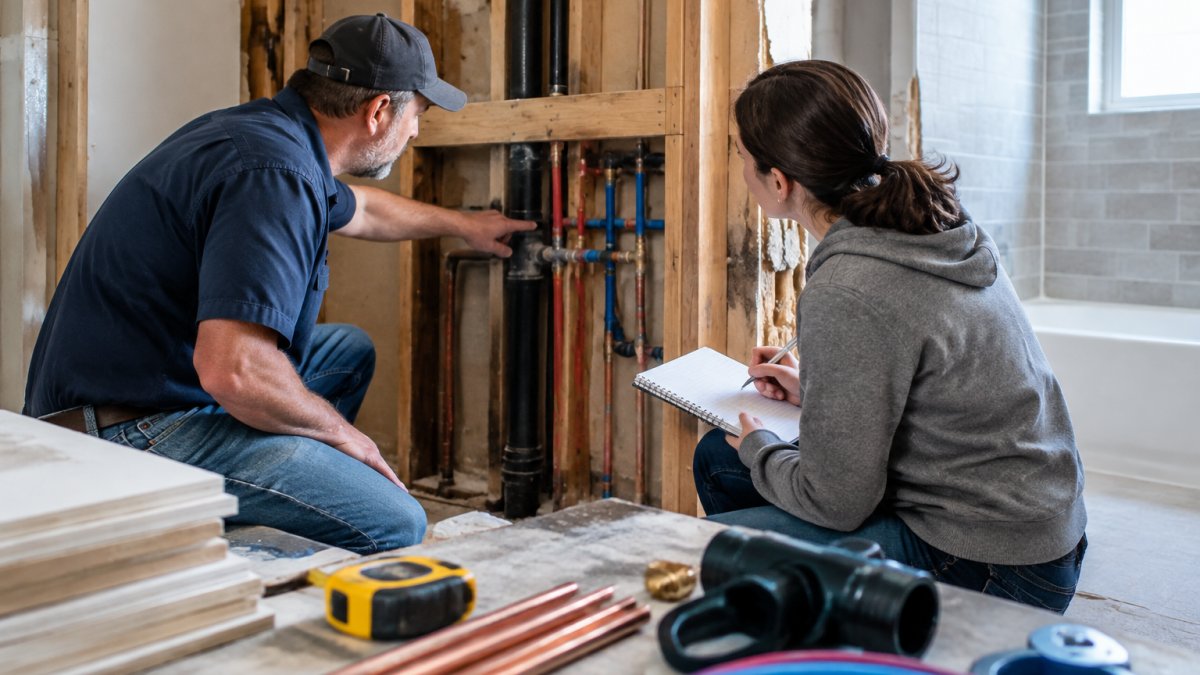
Before signing, ask the contractor to walk through the relevant areas and record known concerns, such as signs of water damage, uneven or damaged framing, outdated plumbing or wiring, difficult access, or existing finishes that may need protection.
When concealed work is uncovered, use a consistent process:
- Ask the contractor to identify the exact location and condition, with photos or other appropriate documentation.
- Request a written description of the proposed repair and why it is needed. If the issue may affect safety or damage prevention, ask what work must pause and what can continue safely.
- Request the added cost, any credit for work no longer needed, and the effect on the schedule before authorizing the change.
- Ask whether there is a reasonable alternative, including a different repair approach or a further inspection, and what trade-offs each option carries.
- Record your decision in a written change order and update the project forecast before the affected work proceeds, except where immediate action is necessary to address an urgent safety or property-protection issue.
Labor and schedule risks are connected: a late delivery, unavailable work area, or trade arriving before preceding work is ready can leave labor unproductive and push later tasks. Ask for the planned sequence of major trades, who coordinates access, and how schedule changes will be communicated. Confirm whether the estimate assumes particular work hours, continuous access, or owner-provided decisions by specific dates.
For materials, identify the specified product or an acceptable equivalent, who approves substitutions, and how price differences are handled. Ask how the estimate treats delivery, storage, damaged goods, and waste. If a product is unavailable, do not assume a substitute has the same price, appearance, or installation requirements; request the proposed replacement and its cost and schedule effects in writing.
Keep a simple risk log with four fields: the condition or assumption, the person responsible for checking it, the evidence or decision needed, and the possible cost or schedule effect. Review it with the contractor at agreed project check-ins. This creates a record of unresolved risks without treating every possibility as a confirmed charge.
Watch out: A verbal statement that a repair is “necessary” does not explain its scope or price; ask for the condition, proposed work, cost, and schedule impact in writing before approving it whenever circumstances allow.
For general repair-planning information, see the Federal Emergency Management Agency’s guidance on home repairs. Project-specific scope, permits, and inspection requirements should be confirmed with the appropriate professionals and authorities.
Step 6: Track costs and respond to surprises promptly
Cost tracking means comparing approved costs with the budget as the project moves along. Keep one current record of the original estimate, approved changes, payments, and remaining contingency. That makes it easier to see whether a new request fits the plan.
When an unexpected cost appears:
- Pause the affected work if safe to do so.
- Ask for photos and a plain-language explanation.
- Request the cost and schedule impact in writing.
- Check the contract and remaining contingency.
- Approve, decline, or ask about another option.
- Update your budget record and project schedule.
Don’t approve vague work described only as “needed.” Ask what happens if you wait, and whether the issue affects safety or later work. For more steps, read how to avoid remodeling budget surprises.
Step 7: Request a clear remodeling estimate from JB's Construction LLC
A clear estimate should connect the planned work to its materials, exclusions, allowances, and next steps. At JB's Construction LLC, we provide free estimates and prioritize communication with customers throughout the project. For custom tile work, additions, or structural repairs, ask questions until the scope makes sense.
Before requesting an estimate, gather:
- Photos and measurements of the work area
- Your must-haves and flexible choices
- Any known damage or past repairs
- Questions about permits, materials, and timing
Our guide to getting an accurate renovation quote explains what to prepare, and how to book a renovation consultation covers the next step. Get a free estimate from JB's Construction LLC and start with a written scope you can review.
Frequently Asked Questions
What are the most common hidden costs in a home renovation?
Common sources include site preparation, excavation or repair of unforeseen site conditions, permit and inspection requirements, material waste or price changes, labor productivity issues, scheduling delays, and subcontractor coordination. The specific risks depend on the project and what is visible before work begins. Ask the contractor to identify assumptions, allowances, exclusions, and unknown conditions in the estimate so you can see which costs are included and which need a plan.
How much should I set aside for unexpected construction costs?
The research provided does not establish a reliable percentage or dollar amount, and a suitable contingency depends on the project scope and known uncertainties. Build a home renovation contingency budget around the risks identified during planning, such as concealed damage or incomplete selections. Keep contingency separate from planned project costs, record each use, and update the remaining balance when an approved change or unforeseen condition affects the forecast.
How can I get a more accurate construction estimate?
Give contractors a defined scope of work, selected materials where possible, and clear information about the existing home. Use a construction estimate checklist to confirm that labor, materials, site preparation, permits, inspections, disposal, allowances, and exclusions are addressed. Ask how concealed conditions and price changes will be handled. A written estimate with assumptions and itemized scope makes gaps easier to spot before work starts.
What should a construction contract include to prevent surprise charges?
The contract should describe the scope of work, included materials and labor, allowances, exclusions, payment terms, schedule assumptions, and the process for approving changes. Construction contract change orders should document the reason for the change, its cost and schedule effect, and written approval before the extra work proceeds. Keep copies of the estimate, contract, selections, messages, and approvals so the project record stays clear.