 how-to
Hiring Contractors for Structural Repairs: 7 Checks Before You Sign
Last Updated: November 3, 2026
Quick Summary
Before hiring a contractor for structural repairs, confirm the problem with a clear diagnosis, since an engineer should assess active cracks, sloping floors, or load-bearing changes. Verify licenses, insurance, and references yourself, and compare bids against one written scope so the cheapest offer is not missing key items.
- Track cracks by marking their ends and dating the marks; growing cracks need professional assessment.
- Choose an engineer first for active cracks, floors sloping noticeably, or bowing basement walls.
- Verify contractor license numbers with your licensing board and get a certificate of insurance.
- Send every contractor the same written scope checklist so bids can be compared fairly.
- Avoid large upfront payments and tie payments to completed milestones with lien waivers.
Table of Contents
- When You Need a Structural Engineer and When a Contractor Is Enough
- Questions to Ask a Contractor Before Hiring
- Verifying Licenses, Insurance, Bonding, and References
- How to Compare Contractor Estimates Apples to Apples
- Structural Repair Contract Checklist and Red Flags to Avoid
- Scheduling Your Structural Repair Consultation With JB's Construction LLC
- Frequently Asked Questions
Hiring a contractor for structural repairs is one of the bigger decisions a homeowner makes, and the quality of the work can be hard to judge after the walls are closed up.
Structural damage rarely announces itself with one dramatic failure. To tell poor-quality construction work apart from acceptable work, see How to Spot Signs of Poor Quality Construction Work.
Some signs deserve attention right away. Look for these warning signals:
- Diagonal or stair-step cracks in brick or block walls
- Horizontal cracks in a basement wall, which can indicate soil pressure
- Floors that slope noticeably toward one side of the house
- Gaps between walls and ceilings or between window frames and walls
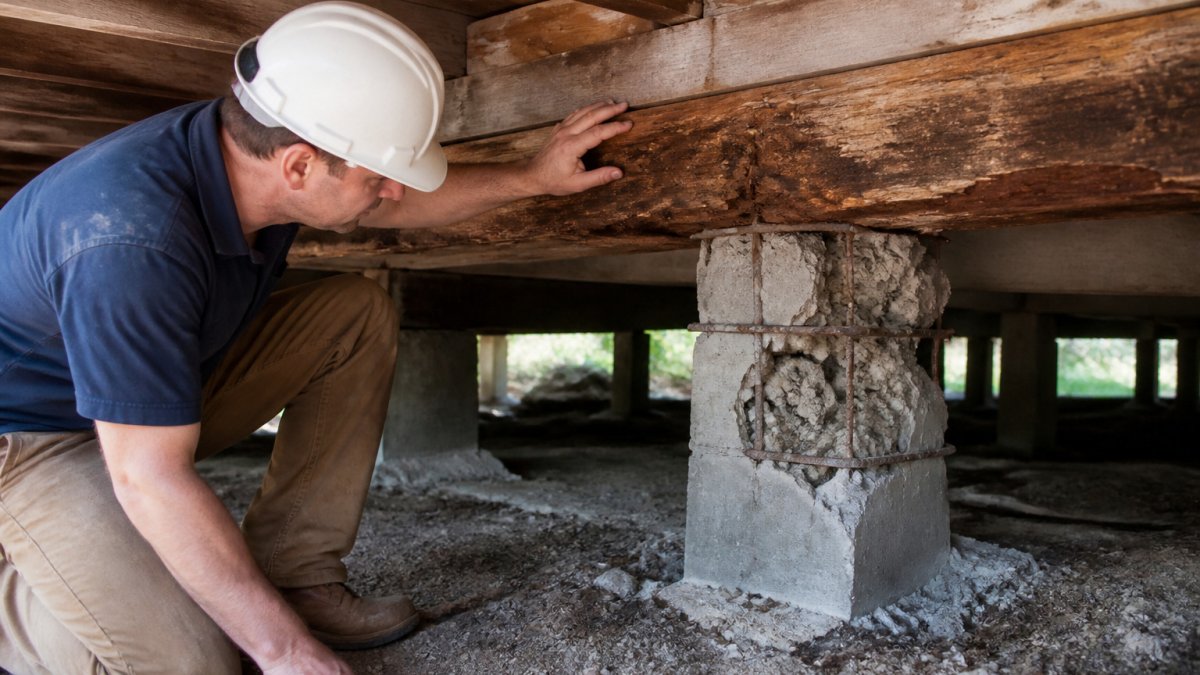
- Sagging beams, rotted posts, or visible movement in the crawl space
- Cracks that widen, lengthen, or reopen after repair
A common mistake is treating a crack as cosmetic without measuring it or tracking how it changes. Mark the ends of a crack with a pencil and date the marks.
Water is another frequent factor. Poor drainage, leaking gutters, and grading that slopes toward the foundation can weaken soil under footings.
When you call a contractor, describe what you have observed in specific terms: where the problem is, when you first noticed it, and whether it is getting worse.
If you see a sudden, severe change, such as a wall bowing inward, a floor that feels unsafe underfoot, or new cracks appearing quickly, leave the area and contact a licensed professional immediately.
When You Need a Structural Engineer and When a Contractor Is Enough
A structural engineer diagnoses the cause of a problem and designs the fix. A contractor carries out the repair. The two roles overlap less than homeowners expect, and mixing them up is one of the most common ways a structural repair goes sideways.

Think of it as three separate jobs: diagnosis, design, and execution. An engineer owns the first two. A contractor owns the third, and may also handle diagnosis on straightforward repairs. The trouble starts when a contractor diagnoses a problem they are also bidding to fix, there is no independent check on whether the proposed repair actually addresses the cause.
Use this framework to decide who you need first:
- Contractor first: A single rotted post, a cracked floor joist with an obvious cause, a small foundation crack that has been stable for years, or cosmetic movement in drywall. A qualified contractor can assess, propose a repair, and perform it.
- Engineer first: Active cracks that widen or reopen, floors that slope more than a fraction of an inch over a few feet, bowing basement walls, any repair that changes how a load is carried, or a problem a previous contractor already tried to fix.
- Engineer required: A lender, insurer, or local building department asks for a stamped letter or design, or the repair involves cutting, removing, or adding a load-bearing element.
A structural engineer's deliverable is usually a written report with photos, a diagnosis, and a repair design, often stamped, that a contractor can bid from. That report is what makes bids comparable.
Engineering fees vary by scope, so ask for a written quote before scheduling a site visit. Ask specifically whether the fee includes a site visit, a written report, a stamped design, and any follow-up inspection after the repair.
Independent engineering advice is the point of the exercise, and a report that simply rubber-stamps the contractor's proposal gives you no protection.
If you are unsure which professional you need, call an engineer's office and describe the problem. Most will tell you over the phone whether the issue sounds like something a contractor can handle or something that needs an assessment.
Questions to Ask a Contractor Before Hiring
The questions you ask in the first conversation tell you a lot about how a contractor works. Ask who will supervise the job, how long they have done structural work specifically, and whether they subcontract the core tasks. Ask how they will document the existing conditions before they start.
Good questions to ask a contractor before hiring include:
- Have you done this type of structural repair before, and can you describe a similar project?
- Who will be on site, and who is my main point of contact?
- Will you or an engineer provide a written scope of work?
- How will you protect the rest of the house during the work?
- What is your process if you find an unexpected problem partway through?
- How often will you update me on progress?
Pay attention to how the contractor answers. Clear, specific answers are a good sign. Vague answers or pressure to sign quickly are not.
The article lists the questions worth asking a contractor before you hire them.
| # | Question to ask | What a good answer looks like |
|---|---|---|
| 1 | Have you done this type of structural repair before? | A similar project they can describe |
| 2 | Who will be on site? | A named main point of contact |
| 3 | Will you provide a written scope of work? | A written scope, or an engineer's |
| 4 | How will you protect the rest of the house? | A specific protection plan |
| 5 | What if you find an unexpected problem? | A clear process for surprises |
| 6 | How often will you update me on progress? | A stated update schedule |
Verifying Licenses, Insurance, Bonding, and References
Verify every credential yourself rather than relying on what appears on a proposal. Check your state or local licensing board for the contractor's license number and confirm it is current and in good standing. Ask for a certificate of insurance and contact the insurer directly if anything looks unclear. General liability and workers' compensation coverage protect you if someone is hurt or if work damages your property.
Bonding is less common for residential work but worth asking about on larger projects. A bond can give you recourse if the contractor fails to finish or pay subcontractors.
Ask for at least three references from recent structural jobs, not just cosmetic remodels. Call them and ask whether the project finished on schedule, whether the contractor communicated well, and whether the repair has held up since.
How to Compare Contractor Estimates Apples to Apples
Estimates for the same job can differ widely, and the cheapest bid is often missing something. For a structured method to get an accurate project quote, follow these steps before comparing bids.
Start by writing a one-page scope checklist and sending it to every contractor you invite to bid. Ask each one to price that exact scope and to list any exclusions separately.
Your scope checklist should force an answer on each of these:
- Diagnosis and design: Is an engineer's report or stamped design included, or is the bid based on the contractor's own assessment? Who pays for the engineer?
- Permits: Who pulls them, who pays the fee, and who is responsible if the inspector requires changes?
- Materials: Brand, grade, and quantity of steel, lumber, concrete, or epoxy. "Steel beam" is not a specification; the size, gauge, and coating are.
- Labor and access: How the work area is reached, whether excavation or shoring is included, and who repairs finishes afterward.
- Temporary protection: Shoring, dust barriers, and protection of floors and landscaping.
- Cleanup and disposal: Debris removal, dumpster fees, and disposal of excavated soil.
- Timeline: Start date, working days, and what happens if the contractor is delayed.
- Warranty: Length, what it covers, and whether it is transferable if you sell.
- Exclusions: Everything the contractor is not doing, written out.
Once bids are in, build a simple grid with your checklist items down the side and each contractor across the top. Mark each cell included, excluded, or unclear.
Watch out: a bid that is dramatically lower than the others is almost always lower for a reason. Common omissions are permits, engineering, disposal, and finish repair.
A bid that is much higher may include work you do not need, or may reflect a more thorough approach. For guidance on ensuring quality in home remodeling projects from start to finish, review it alongside your contract.
Finally, ask each contractor to walk you through their bid in person. How they explain their numbers tells you as much as the numbers themselves.
Structural Repair Contract Checklist and Red Flags to Avoid
A written contract protects both sides. Before you sign, confirm that it includes the full scope of work, the total price and payment schedule, the start and expected completion dates, the permit responsibilities, the warranty terms, and a process for change orders.
Avoid paying a large deposit before work begins. Many homeowners agree that a modest deposit tied to materials is reasonable, while full payment before work starts is a warning sign. Tie payments to completed milestones and get lien waivers when payments are made.
Red flags to watch for include:
- Pressure to sign today or a price that expires immediately
- Requests for cash only or large upfront payment
- No license number, or a license that does not match the company name
- Reluctance to provide insurance certificates or references
- A bid that skips permits or an engineering review for structural work
- Claims that the problem is urgent without an inspection to support it
A contractor who respects your decision will give you time to review the proposal and compare it with others.
Scheduling Your Structural Repair Consultation With JB's Construction LLC
If you have noticed signs of structural damage and want a clear plan, JB's Construction LLC can walk you through your options. Learn how to book a custom home renovation consultation with us. Since 2020, we have focused on residential construction and remodeling, and we keep in touch with customers until the job is done. We provide free estimates, so you can compare a written scope with other bids before you decide.
To get started, contact JB's Construction LLC to schedule a consultation and tell us what you have observed. We will review the problem, explain what a repair would involve, and give you a written estimate you can take your time with. Get a Free Estimate today and take the first step toward a sound, well-documented repair.
Frequently Asked Questions
How much does structural repair cost?
Structural repair pricing depends on the type of damage, the materials involved, how accessible the problem area is, and whether permits or an engineering assessment are required. Because JB's Construction LLC has not published standard pricing for this work, the most reliable way to get a number is to request a free estimate. A written estimate should list each line item, the scope of work, and any assumptions about hidden conditions, so you can see exactly what the price covers before you commit.
Should I hire a structural engineer or a contractor for structural repairs?
A structural engineer assesses the problem, identifies its cause, and produces a repair specification. A contractor carries out the repair. For minor, clearly defined issues, a qualified contractor may be able to diagnose and fix the problem directly. For significant cracks, sagging floors, leaning walls, or damage to load-bearing members, an independent engineering assessment is worth the added cost because it gives you a neutral scope to compare contractor bids against.
What questions should I ask before hiring a structural repair contractor?
Ask how long the company has performed structural work, whether it has experience with your specific problem, who will supervise the job, and how often you will receive updates. Confirm the license, insurance, and bonding status, and ask for references from recent projects of similar scope. Request a written scope of work and ask what happens if the project runs over schedule or the team discovers hidden damage during construction.
Should I get multiple bids for structural repairs?
Yes. Getting at least three written bids helps you understand the range of approaches and prices for your project. The lowest bid is not always the best value, especially if it omits permits, cleanup, or post-repair inspection. Use the bids to check whether each contractor understood the problem the same way, then choose the one with the clearest scope, credible qualifications, and transparent communication.