 ultimate-guide
Managing Your First Home Renovation: A Step-by-Step Guide
Last Updated: November 1, 2026
Quick Summary
Managing your first home renovation means defining the scope in writing, building a budget with a contingency reserve, sequencing trades with inspection points, and choosing a licensed contractor on written terms. Plan each stage before work starts to keep the home renovation on track.
- Write down the problem you are solving before choosing finishes.
- Hold back a contingency reserve of 10-20% of the hard-cost total.
- Require every change order in writing with cost and schedule impact before work proceeds.
- Confirm which stages need inspection and schedule those windows as real appointments.
- Order long-lead materials such as cabinets and specialty tile early to avoid stalls.
Table of Contents
- Setting Renovation Goals and Defining Project Scope
- First-Time Home Renovation Checklist
- Home Renovation Budget Planning
- Home Renovation Project Timeline and Sequencing
- How to Choose a Remodeling Contractor
- Living in Your Home During the Work and Closing Out the Project
- Frequently Asked Questions
Managing your first home renovation can feel overwhelming, but This guide is designed to make the process clear from the first planning meeting to the final walkthrough. Renovations often go sideways because homeowners skip the groundwork, so the sections below walk through each stage in the order that matters most. Whether you're planning a bathroom addition, an interior remodel, or structural repairs, managing your first home renovation starts with knowing what you want and what it will take.
Setting Renovation Goals and Defining Project Scope
Every successful renovation starts with a written statement of what you want to change and why. Without it, scope creeps, budgets drift, and contractors end up guessing. Write down the problem you're solving, such as a cramped bathroom or a failing foundation, before you think about finishes.
Deciding Which Rooms and Tasks Come First
Prioritize based on need, not excitement. Structural and safety issues come first, followed by systems like plumbing and electrical, then finishes like tile and cabinetry. A common mistake is choosing a kitchen countertop before confirming the wall behind it can support the work. Rank your tasks in three columns: must-do, should-do, and nice-to-have.
First-Time Home Renovation Checklist
Before work begins, gather the documents and decisions that keep a project on track:
- Written scope of work with room-by-room details
- Measured floor plans and photos of existing conditions
- Finish selections (tile, fixtures, cabinet style) with lead times noted
- Confirmed permit requirements with your local building department
- Emergency contact list for the contractor and your household
- Storage plan for belongings and a clear path to working areas
Home Renovation Budget Planning
A workable budget separates what you know from what you're guessing. Start with firm quotes for labor and materials, then layer in a contingency reserve for surprises. Use an accurate project quote process to replace guesswork with real numbers before you commit to a budget. Quotes should spell out what is included, such as demolition, disposal, and permits, so you can compare bids on equal terms. JB's Construction LLC provides free estimates for projects.
Building a Budget You Can Actually Track
Most first-time renovators underbudget because they plan around the visible finishes and forget the invisible work. A practical budget has four layers:
- Hard costs, labor and materials backed by written quotes, not ballpark guesses.
- Soft costs, permits, design fees, engineering, dumpster rental, and temporary storage.
- Contingency reserve, money held back for what's behind the walls. A common planning practice is to reserve 10-20% of the hard-cost total, with the higher end for older homes or projects that open up walls and systems.
- Living costs, temporary kitchen setup, eating out, laundry, or short-term lodging if the home becomes unlivable.
Track every line in a spreadsheet with three columns: estimated, committed, and paid. Update it weekly so you see overruns while there is still room to adjust. A budget you review only at the end is a postmortem, not a management tool.
Estimating Costs and Allowing for Contingencies
Pricing depends on material choices, quantity, delivery dates, and the condition of what's behind the walls. For current prices or a quote on your project, contact JB's Construction LLC directly.
Allowances deserve special attention. An allowance is a placeholder dollar amount for an item you haven't selected yet. If the allowance is set low to make the bid look competitive, every selection above it becomes an extra. Ask for the allowance schedule in writing and compare it against real showroom prices before you sign.
Handling Change Orders and Unexpected Costs
Change orders are written updates to scope or price, and they should never be verbal. When you request a change, ask for the revised cost and schedule impact in writing before the work proceeds. If the contractor uncovers rot or outdated wiring, that discovery should trigger a documented change order, not a surprise invoice.
A change order should include four things: a description of the work, the added or subtracted cost, the effect on the schedule, and signatures from both parties. Keep a numbered log of every change order so the final invoice can be reconciled line by line. Set a personal rule that no work proceeds on a change until you have signed, even for small amounts, because small verbal extras are how budgets creep.
For a deeper look at avoiding these overruns, read How to Avoid Remodeling Budget Surprises.
Home Renovation Project Timeline and Sequencing
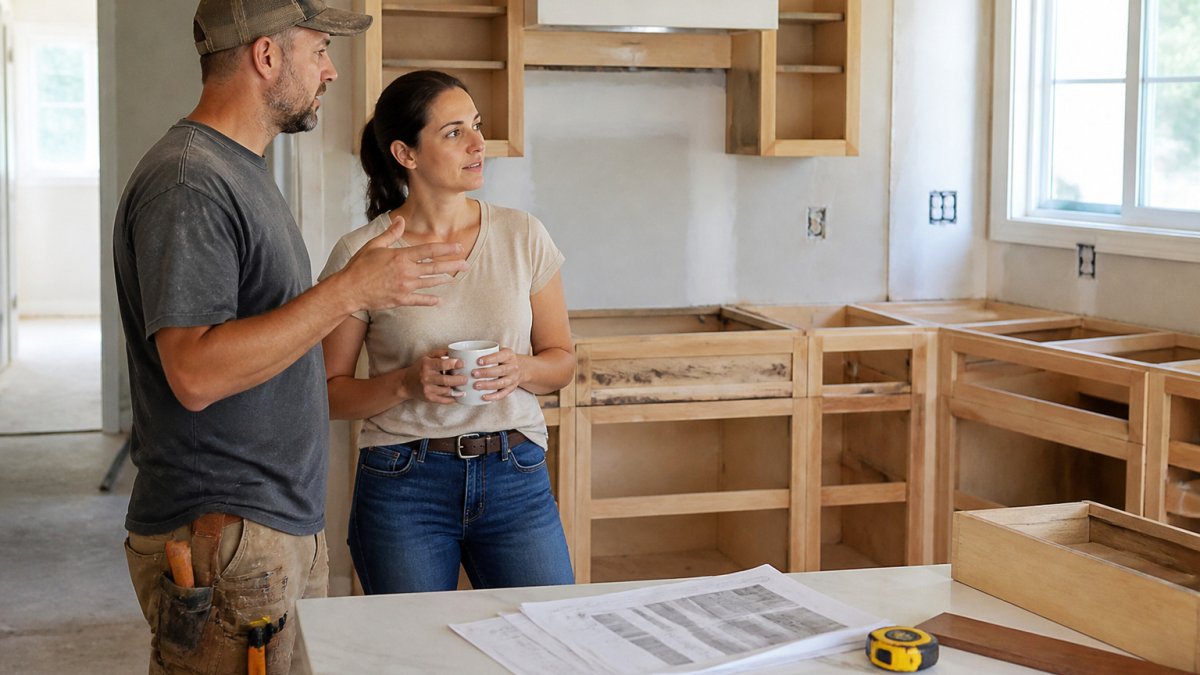
A realistic timeline sequences trades so each one has room to work. Demolition comes first, then rough-in plumbing and electrical, inspections, insulation, drywall, finishes, and final fixtures. Ask your contractor for a schedule with milestones, and check in when each milestone is reached. Delays in one phase ripple into everything after it, so build buffer time into your expectations.
The Sequence Behind the Schedule
The order above is not arbitrary, it follows inspection requirements and the physical dependencies between trades. Rough-in plumbing and electrical must be inspected before walls close, which is why drywall cannot start until those inspections pass.
Two sequencing mistakes catch first-time renovators repeatedly. First, ordering materials with long lead times too late, cabinets, windows, and specialty tile can take weeks or months, and a late delivery stalls the trades behind it. Second, scheduling inspections as an afterthought.
Buffers, Milestones, and What to Track
Build buffer into the schedule at the points where uncertainty is highest: after demolition, when hidden conditions are revealed, and before finish trades start, when selections must be final.
Track the project with a simple decision log and schedule. The decision log records every selection, tile, paint color, fixture model, grout, with the date chosen, the date ordered, and the expected delivery. The schedule lists each milestone with a planned date and an actual date.
Coordinating Contractors and Installation
On a multi-trade project, coordination is the contractor's job, but you can help by keeping selections final. Every late change ripples through the schedule. Confirm who is responsible for site access, deliveries, and disposal, and make sure the contractor knows your household's daily routine so work hours and quiet periods are respected. When a milestone is reached, inspect the work before the next trade starts, once drywall covers the rough-in, correcting it becomes expensive.
The article lays out the typical order of trades and the key sequencing and buffer points to watch.
| Stage | What comes next | Why it matters |
|---|---|---|
| Demolition | Rough-in plumbing and electrical | Starts the work sequence |
| Rough-in plumbing and electrical | Inspection before walls close | Must pass before drywall |
| Drywall | Tile and cabinetry | Substrate must be finished and flat |
| Paint | Final fixtures | Avoids repainting around vanities |
| Long-lead materials | Ordered early | Cabinets and specialty tile can take weeks or months |
| Milestones | Weekly schedule review | Catches delays while cheap to fix |
How to Choose a Remodeling Contractor
Choosing the right builder matters more than any single material decision. Look for a licensed, insured contractor with a documented track record on projects similar to yours, and ask for references you can actually call. Book a consultation to talk through your goals with a builder before you commit to a bid. Request at least three written bids, and compare the scope, not just the total. JB's Construction LLC has served residential construction and remodeling needs since 2020, with a focus on custom tile work and home additions.
Permits, Inspections, and Written Contract Safeguards
Permits protect you and your investment. Your contractor should pull required permits and schedule inspections at the points the local building department mandates. Never sign a contract that lacks a written scope, a payment schedule tied to completed work, and a clear process for change orders. Avoid large upfront payments, and keep receipts for every draw.
Living in Your Home During the Work and Closing Out the Project
Plan how your household will function during construction. Set up a temporary kitchen or bathroom, protect belongings in the work zone, and agree on daily working hours with your contractor. Communication matters here: ask how often you'll receive updates and who to contact with questions. At closeout, walk the space with the contractor, create a punch list of remaining items, and confirm that warranties and inspection sign-offs are in hand. To make sure the finished work meets your standards, see Ensuring Quality in Home Remodeling Projects.
Frequently Asked Questions
How do I manage my first home renovation?
Start by writing down your goals, then define the scope room by room. Build a budget that includes a contingency of roughly 10 to 20 percent, get written bids from at least three contractors, and confirm who will pull permits. Keep one shared document with decisions, costs and dates so you always know where the project stands. Schedule a weekly check-in with your contractor, and ask for a written update whenever a change affects cost or timing. Most first-time owners find that organization, not construction knowledge, is what keeps the project on track.
What should I renovate first in a house?
Address structural, water and electrical issues before cosmetic work, because finishes can be damaged by later repairs. Start with roof, foundation, plumbing and wiring problems, then move to layout changes such as walls or openings. Once the infrastructure is sound, handle rough-in work for kitchens and bathrooms, followed by flooring, paint and fixtures. Ordering the work this way reduces rework and protects the investment you make in finishes.
How do I create a realistic home renovation budget?
List every line item, including labor, materials, permits, design fees, and disposal of old materials. Get quotes rather than estimates when possible, and ask suppliers how long prices are valid. Add a contingency reserve of at least 10 percent for unexpected conditions such as hidden water damage or outdated wiring. Pricing depends on quantity, dates, and delivery, so request a current quote from JB's Construction LLC on your specific project.
How long does a typical home renovation take?
Timelines vary widely with scope. A single bathroom refresh may take a few weeks, while a kitchen remodel or addition often runs several months once permits and material lead times are included. Ask your contractor for a schedule with milestones, and build in buffer time for inspections and backordered materials. Expect some delays, and plan for them in your budget and your daily routine.
What should I ask a contractor before starting a renovation?
Ask for proof of license and liability insurance, and check references from recent projects of similar size. Request a written contract that lists the scope, the payment schedule, the start and finish dates, and how change orders are priced. Confirm who will handle permits and inspections. Ask how often you will receive updates and who your day-to-day contact will be. A clear answer to each of these questions is a good sign.
How do I stay organized during a home renovation?
Keep one folder, digital or paper, with contracts, bids, permits, receipts and photos. Maintain a decision log that records each choice, its cost and its date. Set up a regular check-in with your contractor and review the punch list before final payment. Organized records also make it easier to resolve disputes and to file for warranty claims later.
How can I avoid common mistakes during my first renovation?
The most common mistakes are skipping a written contract, underfunding the contingency reserve, and changing selections after work has started. Other frequent problems include choosing finishes before measuring, ignoring permit requirements, and paying large amounts up front. Make decisions early, pay by milestone rather than in advance, and confirm every change in writing. Taking these steps protects both your budget and your schedule.