 blog
What Are the Signs of Structural Damage in a House?
Last Updated: November 16, 2026
Quick Summary
Signs of structural damage in a house include foundation cracks wider than a hairline, especially stair-step cracks in block or brick, diagonal wall cracks running from door or window corners, sagging or sloping floors, sticking doors and windows, and bulging or leaning walls. Photograph what you see and leave probing to a professional.
- Structural damage affects the foundation, load-bearing walls, floor joists, roof framing, and their connections.
- Never knock out drywall or dig around the foundation to check a crack yourself.
- Photograph each crack with a coin or ruler beside it and date every photo.
- Re-shoot the same spots every few months to see whether a crack is growing.
- Poor drainage and soil movement cause foundations to settle unevenly and cracks to widen.
Table of Contents
- What Is Considered Structural Damage to a House?
- Signs of Structural Damage in a House Exterior
- Signs of Structural Damage in a House Pictures: What to Photograph
- Frequently Asked Questions
What Is Considered Structural Damage to a House?
Structural damage is any harm to the parts of a house that carry weight and hold it together: the foundation, load-bearing walls, floor joists, roof framing, and their connections. Cosmetic flaws like hairline paint cracks are not structural damage. If a crack or sag affects how the house supports itself, it counts.
- Foundation cracks wider than a hairline, especially stair-step cracks in block or brick
- Wall cracks that run diagonally from corners of doors or windows
- Sagging floors or floors that slope toward one side
- Sticking doors and windows that no longer close the way they used to
- Bulging or leaning walls with a visible bow
- Gaps between walls and ceilings, or around trim
Never knock out drywall or dig around the foundation to "check" a crack yourself, that can turn a small repair into a big one and hides evidence an inspector needs. Photograph what you see and leave probing to a pro.
To separate true structural trouble from sloppy finish work, see our guide on how to spot signs of poor quality construction work.
Signs of Structural Damage in a House Exterior
Start outside. The exterior tells the story early, before interior cracks show up.
- Stair-step cracks in brick or block foundation walls
- Diagonal cracks at the corners of the foundation
- Soil pulling away from the foundation, or a visible gap at the base
- A sagging roofline where the ridge or eaves dip
- Bowing or leaning walls you can spot by sighting down the wall
- Water pooling near the foundation after rain
- Gaps where the siding, trim, or porch meets the house
Poor drainage and soil movement drive many of these: water softens soil and the foundation settles unevenly, and seasonal movement can widen a crack that looked harmless last spring.
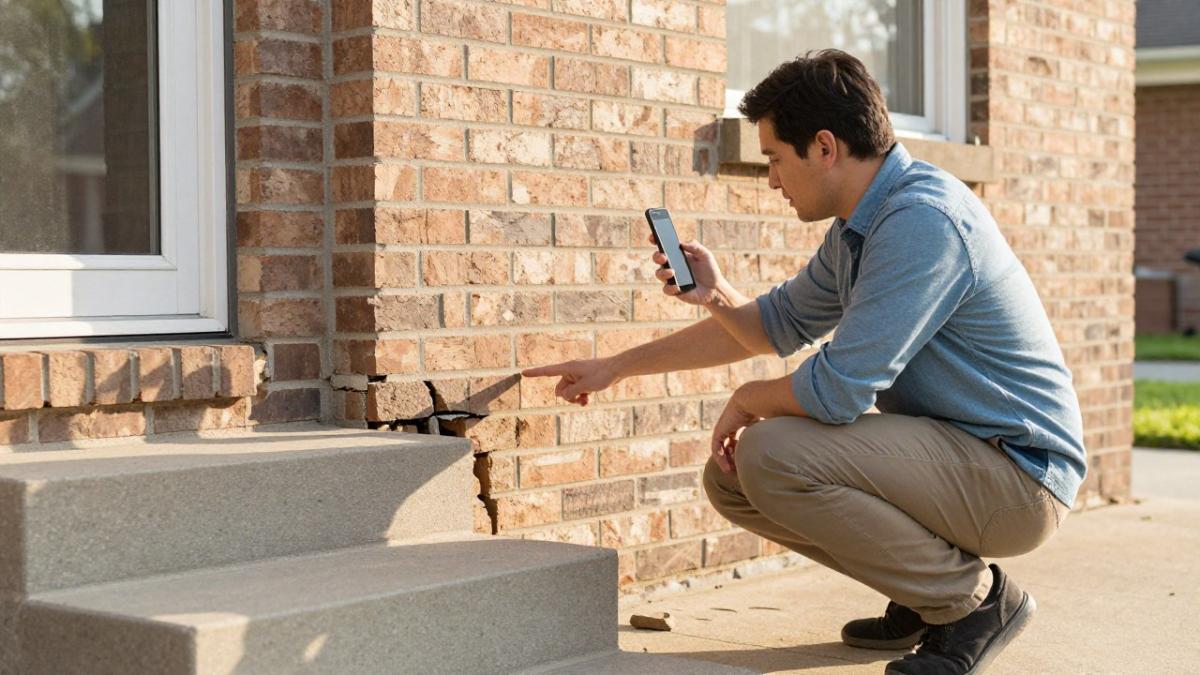
Once you spot exterior warning signs, our breakdown of structural repair safety standards for 2026 covers what a proper repair should meet. If you also notice sagging floors, our guide on repairing sagging floor joists before they worsen explains what is involved.
Here are the exterior warning signs the article says to look for first.
| Exterior sign | What it looks like |
|---|---|
| Stair-step cracks | In brick or block foundation walls |
| Diagonal cracks | At the corners of the foundation |
| Soil pulling away | Visible gap at the base |
| Sagging roofline | Ridge or eaves dip |
| Bowing or leaning walls | Spotted by sighting down the wall |
| Water pooling | Near the foundation after rain |
| Gaps | Where siding, trim, or porch meets the house |
Signs of Structural Damage in a House Pictures: What to Photograph
Photos help a professional assess the problem and show whether a crack is getting worse. Take these shots:
- A wide shot of each affected wall or area
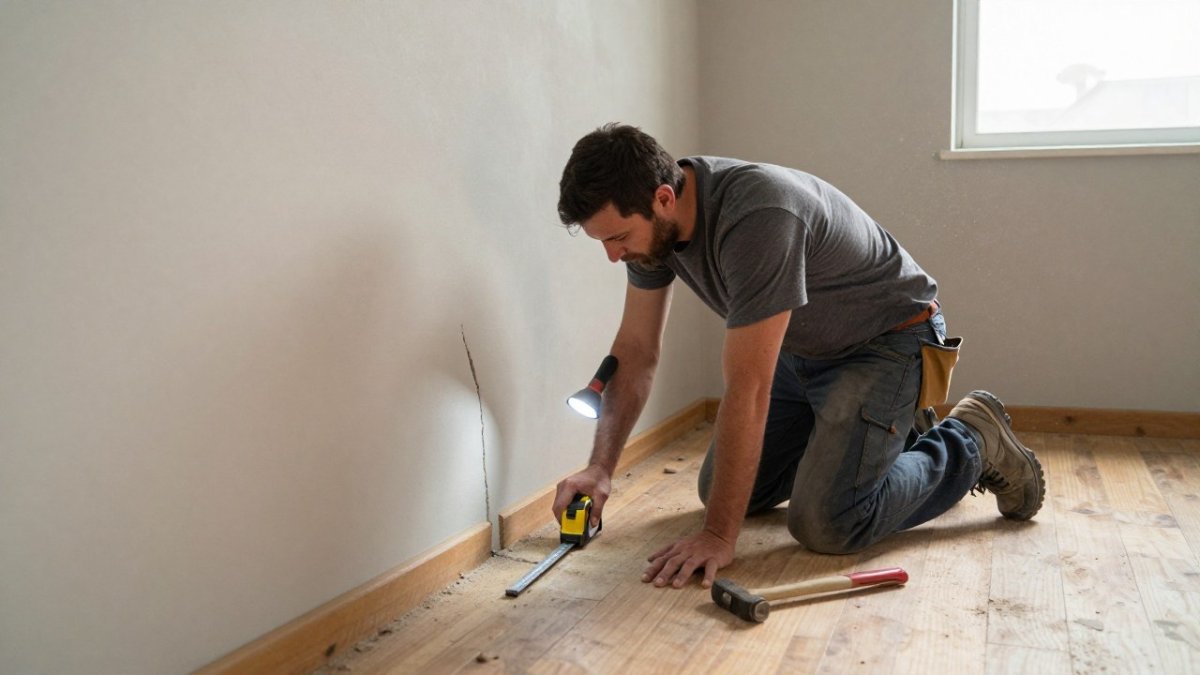
- A close-up of every crack, with a coin or ruler beside it
- The full crack path, start to end
- Doors and windows that stick, showing the gap
- The foundation base all the way around the house
- The roofline from across the street
Date each photo and re-shoot the same spots every few months. If a crack grows, call a qualified professional, measuring crack width over time beats guessing.
A common mistake is photographing only the crack, not the surrounding wall. The pattern matters as much as the width: a diagonal crack from a window corner tells a different story than a straight vertical one.
Once documented, bring in help. Our checklist of checks to run before you sign with a contractor covers what to ask and verify first.
Cracks and sags are worth taking seriously, but you do not have to face them alone. JB's Construction LLC handles structural rebuilds and remodeling for homeowners, with clear communication from the first call to the final walkthrough. We offer free estimates and keep you informed until the job is done. Get started with JB's Construction LLC and get a straight answer on what your house needs.
Frequently Asked Questions
How to tell if your house has structural damage?
Look for a pattern of symptoms rather than a single crack. Warning signs include diagonal or stair-step cracks in the foundation, doors and windows that stick or no longer latch, uneven or sloping floors, and gaps where walls meet ceilings or trim. Measure any crack with a ruler and photograph it monthly. If a crack widens beyond 1/4 inch, runs diagonally, or appears alongside sticking doors, call a licensed structural engineer for a professional assessment.
Will insurance pay for structural damage?
Coverage depends on the cause. Most homeowner policies cover sudden events such as a fallen tree, fire, or burst pipe, but exclude long-term settlement, soil movement, and lack of maintenance. Water intrusion from poor drainage is often denied as a maintenance issue. Document the damage with dated photos and a written timeline, then file a claim and ask the adjuster to identify the cause in writing. A structural engineer's report can support your claim if the cause is disputed.
Which cracks in walls or foundations are a cause for concern?
Hairline cracks under 1/16 inch are usually cosmetic and linked to plaster shrinkage or seasonal movement. Cracks between 1/16 and 1/4 inch are worth monitoring with a photo log. Seek immediate attention for cracks wider than 1/4 inch, diagonal or stair-step cracks in block or brick foundation walls, cracks that worsen quickly, or any crack paired with bulging walls, uneven floors, or sticking doors. Those patterns point to foundation movement rather than surface settling.